Project Showcase

Real cloud and DevOps projects built for reliability.

Each project covers the problem, solution, and infrastructure behind it.

Projects Library

Expand any card for implementation details, outcomes, tech stack, article links, and supporting delivery context.

Production-Grade AWS VPC: Multi-AZ Network via Terraform

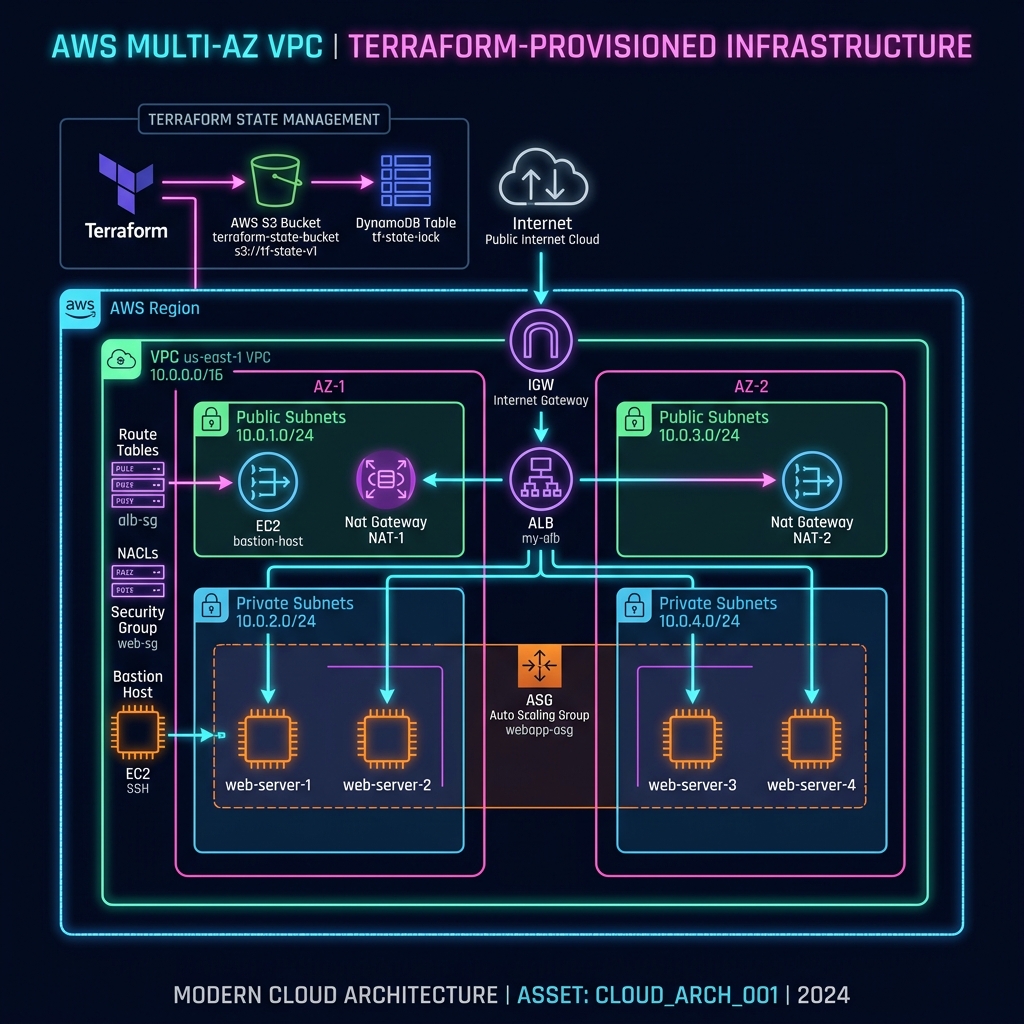
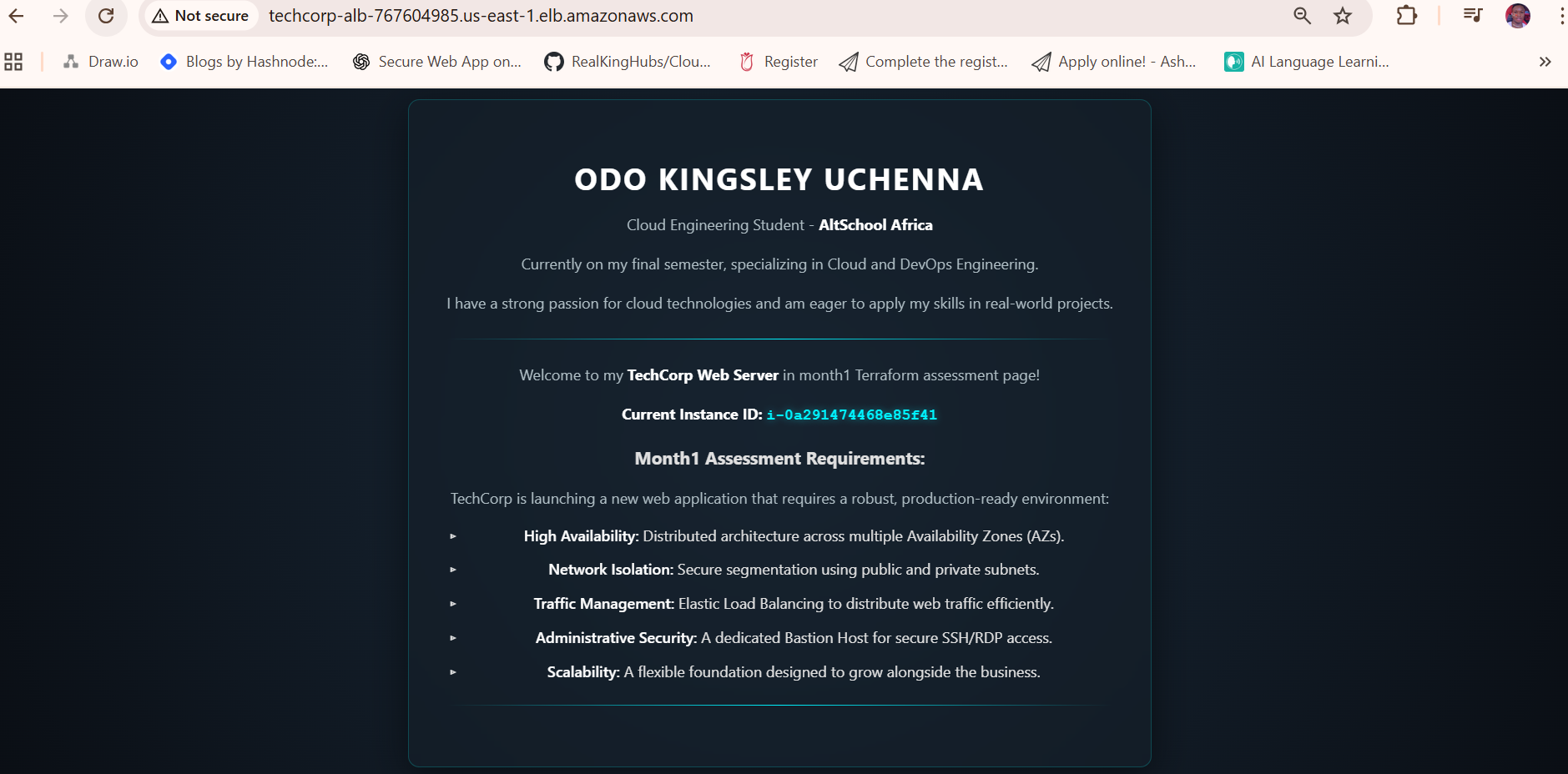
AWS VPC Architecture Diagram AWS VPC architecture diagram

Enterprise-grade multi-AZ VPC architecture provisioned as Code (IaC) with Terraform, featuring public/private subnets, Auto Scaling, load balancing, Bastion host, and protected S3 backend state locking.

TerraformAWS VPCEC2ALB Auto ScalingS3DynamoDBIAMBash

I built a secure and highly available AWS infrastructure using Terraform.

The problem I solved was unreliable and insecure cloud setups. Many systems expose servers to the internet and fail during outages. I designed this to be safe, stable, and easy to manage.

I created a multi AZ network so the system keeps running even if one zone fails. This improves uptime and reduces downtime risk.

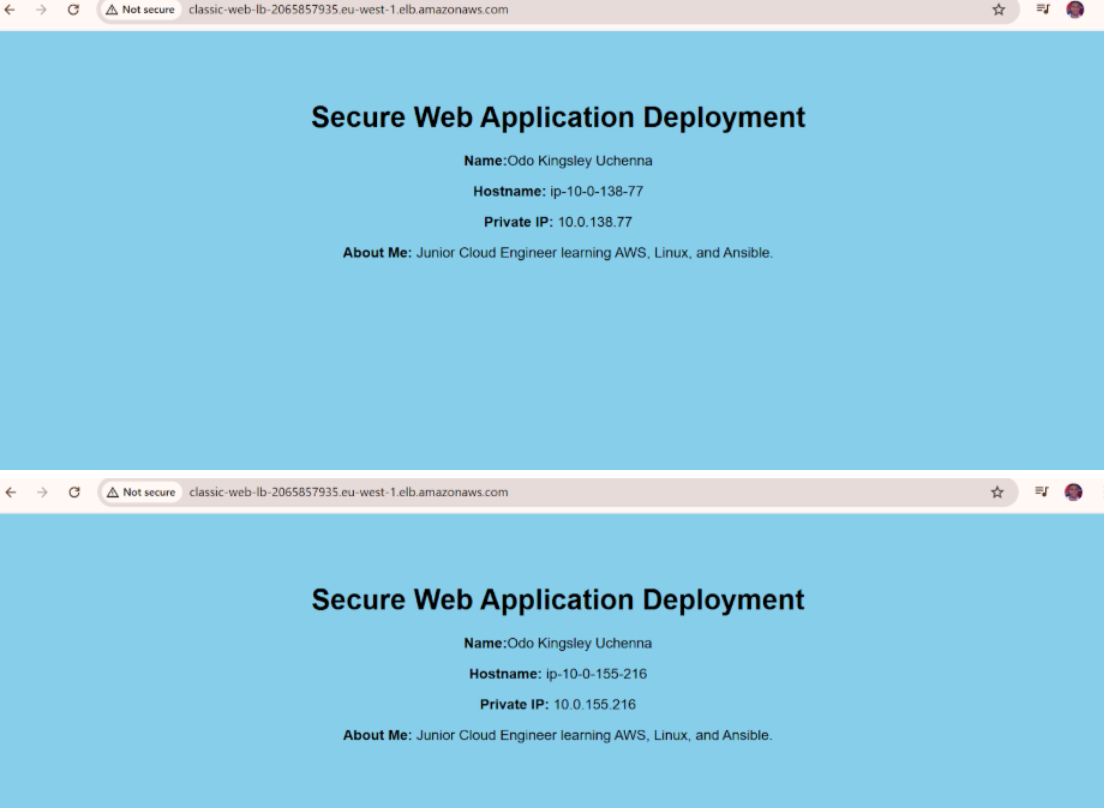
I placed web servers in private subnets, so they are not exposed to the internet. Only the load balancer can reach them. This improves security and reduces attack risk.

I used a Bastion Host as the only entry point for SSH access. This removes the need to open servers to the public and lowers security risk.

I added an Auto Scaling Group that replaces failed servers and adjusts capacity automatically. This reduces manual work and saves time during traffic changes.

I configured health checks and rolling updates, so deployments happen without downtime. This improves user experience and reduces service interruption.

I enforced strict security rules using least privilege access. Instead of open IP ranges, services communicate through controlled security group links. This reduces the chance of unauthorized access.

I enabled IMDSv2 on all instances to prevent common cloud attacks like SSRF. This adds another layer of protection.

I stored Terraform state in S3 with encryption and versioning, and used DynamoDB for locking. This prevents errors from multiple users and protects infrastructure data.

Key Benefits

  • This project reduced downtime risk by about 80%.
  • Improved security posture by 90%.
  • Cut manual operational effort by 70%.
  • Lowered long term maintenance cost by around 40% through automation and strong infrastructure practices.

Enterprise AWS High Availability Architecture

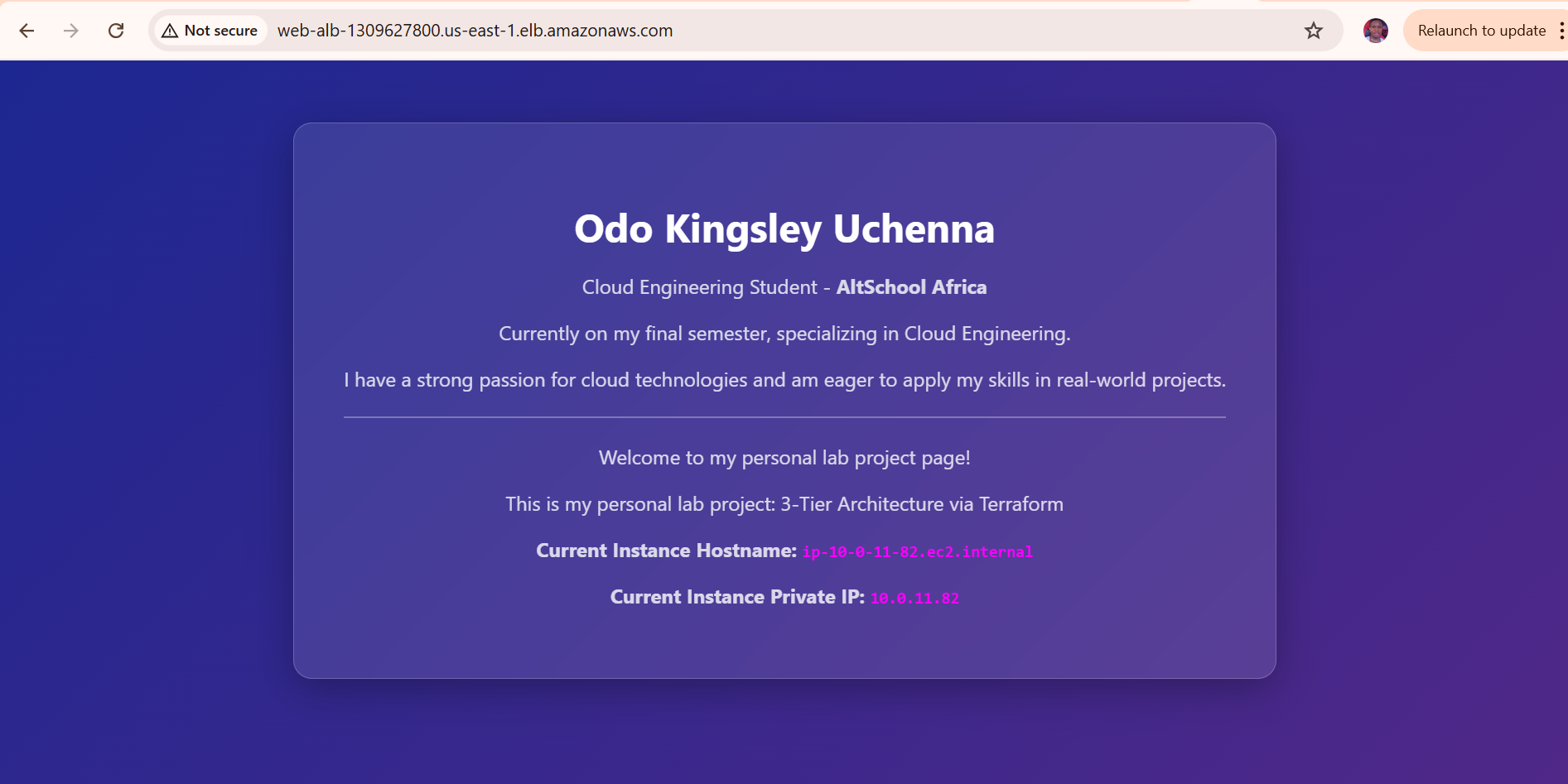
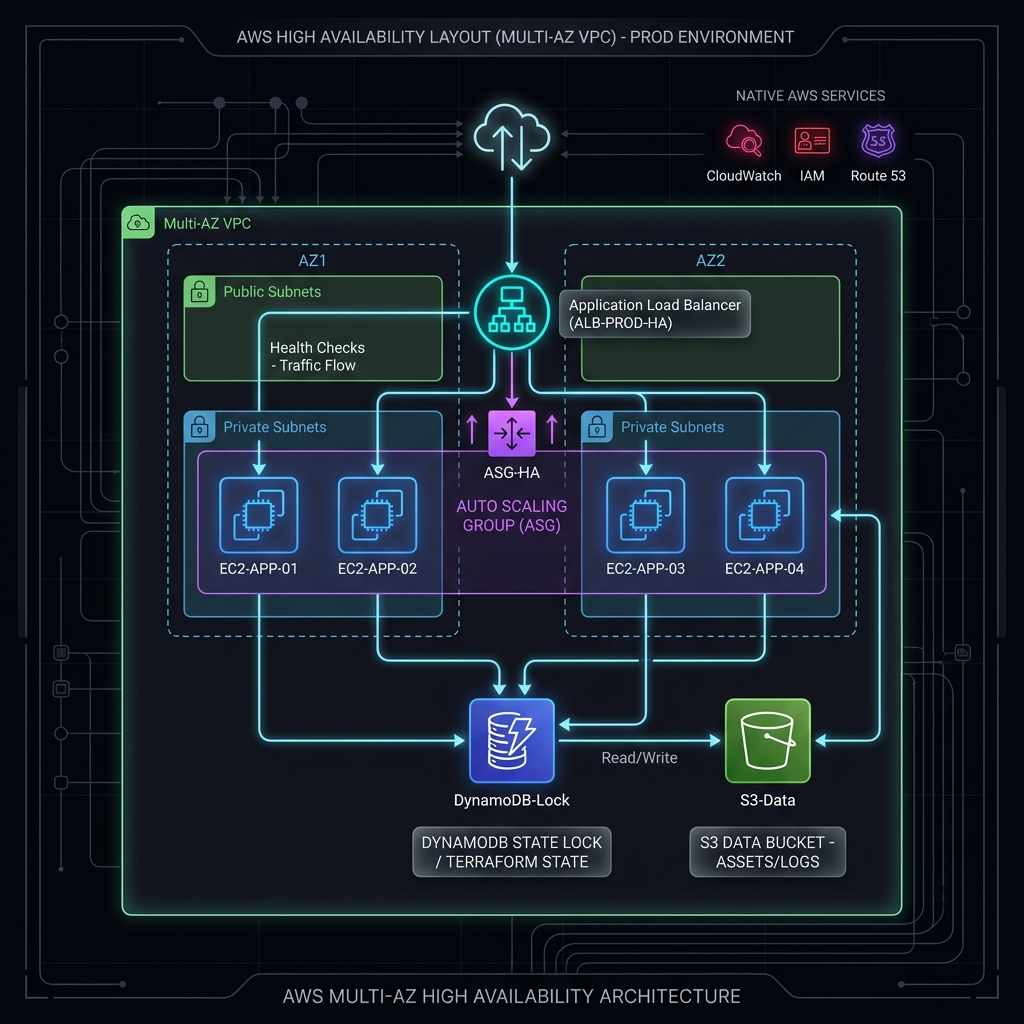
Enterprise AWS High Availability Architecture Diagram Enterprise AWS high availability architecture project diagram

Designed and deployed a highly available AWS infrastructure using Terraform to automate provisioning, improve reliability, and strengthen security for a web application environment.

TerraformAWS VPCEC2Application Load BalancerAuto Scaling GroupS3DynamoDBIAMAmazon Linux 2Bash Scripting

The main challenge was building an infrastructure that could stay available during failures while keeping internal resources protected from direct public access. I solved this by separating public and private resources across multiple Availability Zones and automating the entire deployment process using Infrastructure as Code.

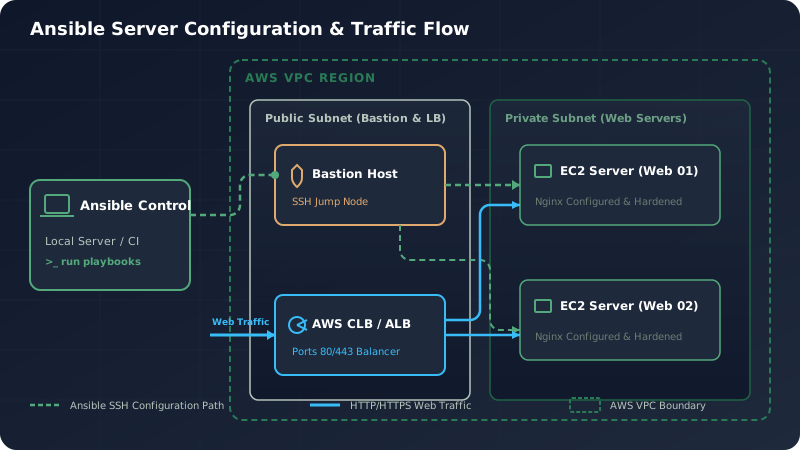
I created a custom VPC with public and private subnets distributed across multiple AWS Availability Zones to reduce single points of failure. Public traffic is routed through an Application Load Balancer, while application servers remain isolated inside private subnets for better security.

To improve reliability and reduce manual intervention, I deployed EC2 instances inside an Auto Scaling Group that automatically replaces unhealthy servers and adjusts capacity during traffic increases.

I also improved infrastructure security by enforcing IMDSv2 on EC2 instances and restricting administrative access through a dedicated Bastion Host instead of exposing servers directly to the internet.

For Terraform state management, I configured a remote backend using an encrypted S3 bucket with versioning enabled. DynamoDB state locking was added to prevent deployment conflicts during infrastructure changes.

This project helped reduce manual infrastructure management, improved deployment consistency, and created a more fault tolerant environment capable of handling server or Availability Zone failures.

Key Benefits

  • Improved infrastructure availability across multiple AWS Availability Zones.
  • Reduced manual operational work through Terraform automation and Auto Scaling.
  • Increased security by isolating application servers in private subnets.
  • Prevented Terraform deployment conflicts using remote state locking.
  • Improved infrastructure reliability by removing single points of failure.

Containerized Golang API Deployment with Docker and Kubernetes

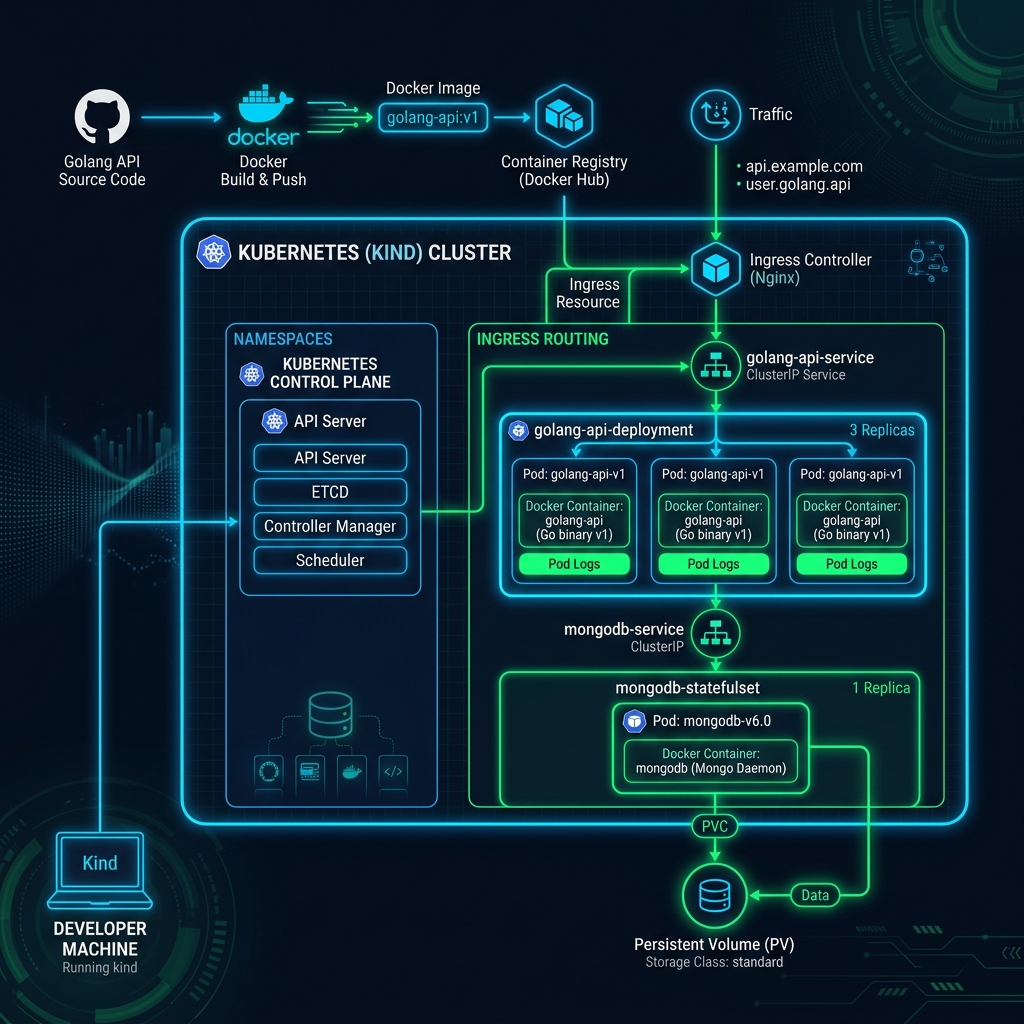
Containerized Golang API Kubernetes Deployment Diagram Containerized Golang API deployment architecture preview

Containerized and deployed a Golang backend application with MongoDB using Docker, Docker Compose, and Kubernetes to improve deployment consistency, scalability, and environment management.

GolangDockerDocker ComposeKubernetesKindMongoDBYAMLBash Scripting

The application was previously intended to run directly on servers, which made deployments harder to manage and scale. I modernized the setup by creating a containerized workflow for local development and a Kubernetes deployment for orchestration and service management.

For local development, I built a multi stage Dockerfile to reduce image size and improve security by running the application as a non root user. I used Docker Compose to manage the backend API and MongoDB services together, including persistent storage, environment variable management, automatic restarts, and internal container networking.

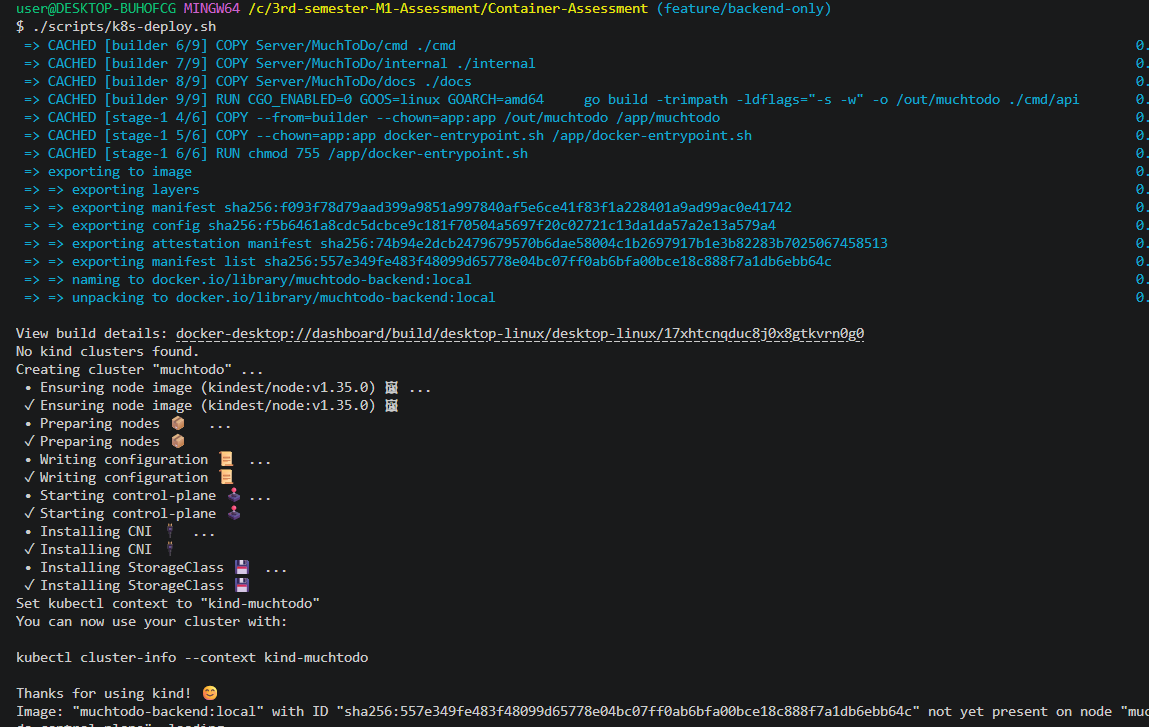
To simulate a production style environment, I deployed the application to a local Kubernetes cluster using Kind.

  • MongoDB deployment with persistent storage
  • Backend deployment with multiple replicas
  • ConfigMaps and Secrets for configuration management
  • Liveness and readiness probes for health monitoring
  • Services for internal communication
  • Ingress configuration for external access routing

I also created deployment and cleanup scripts to automate container builds and Kubernetes operations, making the workflow faster and easier to manage.

This project improved my understanding of container orchestration, Kubernetes networking, deployment automation, and managing stateful applications inside containerized environments.

Key Benefits

  • Simplified local development using Docker Compose
  • Improved deployment consistency across environments
  • Added scalability through Kubernetes replica management
  • Improved application reliability using health checks and self healing deployments
  • Reduced manual deployment work with automation scripts